
When Hyper-Growth Breaks Your CX Team

Welcome to issue #017 of The Wrong Way First, your guide to skipping avoidable mistakes and building better. To get these lessons from the front lines directly to your inbox each week, be sure to subscribe.
Everyone loves growth, until it breaks everything. The volume spikes. Expectations soar. But your systems? They’re stuck in the slow lane. Suddenly, your once-smooth CX operation feels like a house of cards.
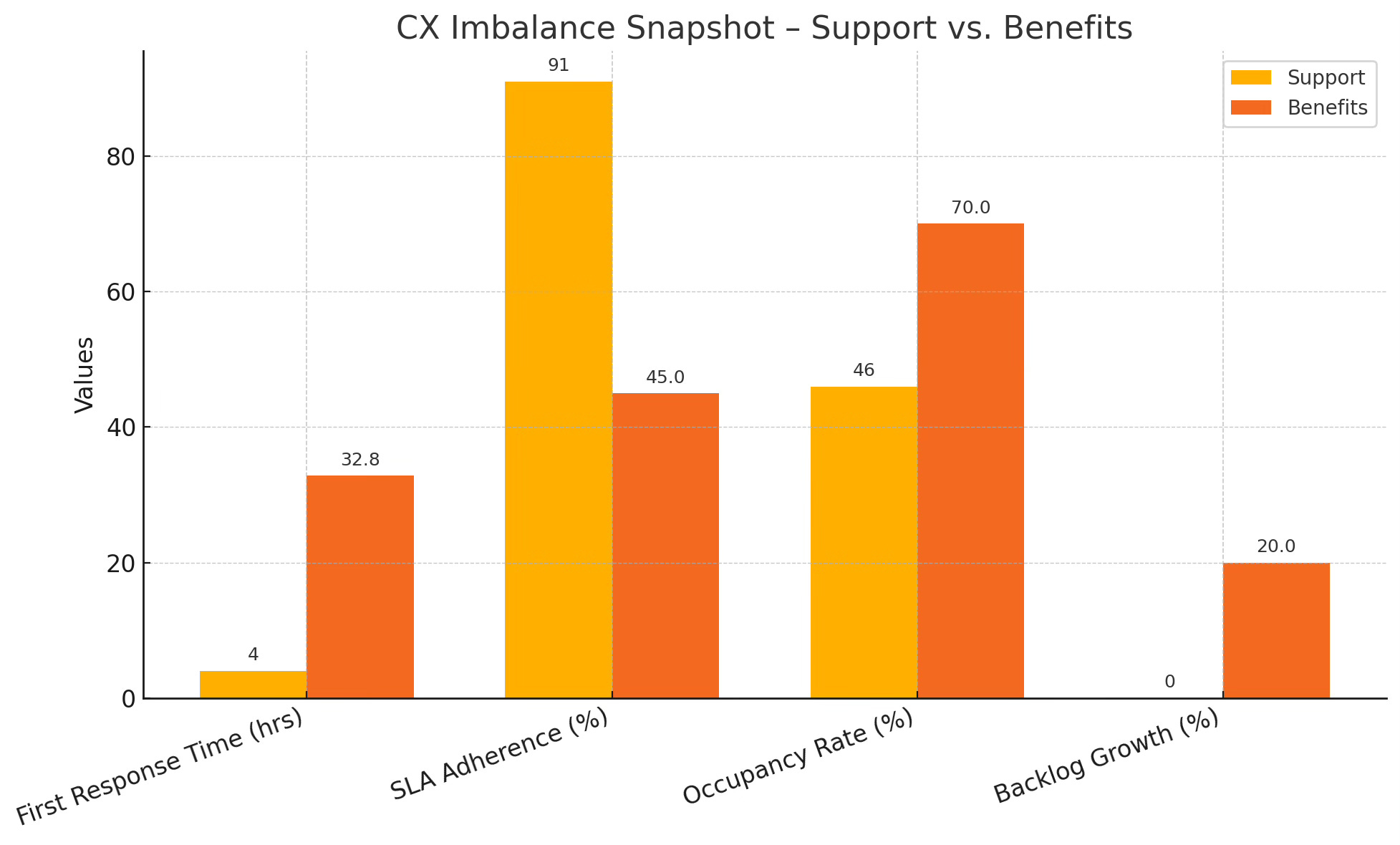
I recently dug into a case that hit close to home. Picture two teams, Support and Benefit Services, serving the same customers but acting independently. Support answered inquiries in 4 hours but sat idle half the time, with only 46% occupancy. Benefits, on the other hand, was drowning, missing over half their 24-hour response goals, with replies dragging out a day or more and a backlog that grew 20% over just a few weeks. Worse, 30% of tickets bounced between the two teams, leaving customers frustrated and agents burned out. This wasn’t a people problem. It was a structure problem. The team had scaled, but the model hadn’t. Hyper-growth doesn’t just test your CX, it exposes every crack in your foundation.
Here’s how to rebuild without losing customers, or your sanity.
1. Break down silos for good
Silos turn simple inquiries into endless loops. Support and Benefits had separate training, tools, and processes, so when a customer’s issue crossed team lines, it got stuck. We merged them into one Member Experience team, cross-training agents to handle 75% of inquiries, from account issues to reimbursement questions. A shared knowledge base and unified goals, like response time and customer satisfaction, cut handoffs to under 10%. It wasn’t about reinventing the wheel. It was about aligning everyone to the same customer journey and holding them accountable to shared outcomes.
2. Streamline processes that choke
Processes don’t age well, they get bloated. The reimbursement flow in this case was a mess: multiple approvals, manual checks, and no clear ownership, dragging out resolutions for days. We mapped the full member journey, stripped out unnecessary steps, and automated routine work like eligibility verification. Once the noise was cleared, resolution times dropped and customer satisfaction improved. No one should have to wait while a CX agent “checks with another team.” Clarity, speed, and ownership should be built into every step of the workflow.
3. Use AI to lighten the load, not lead the show
AI can’t fix a broken system, but it can make a healthy one more efficient. We introduced automation in a few focused areas: FAQs handled by chatbots, smarter ticket routing to the right agents, and AI tools that flagged known reimbursement issues early. This freed up agents to focus on complex or high-emotion cases, where human empathy actually matters. The result wasn’t just faster replies, it was better experiences, powered by agents who finally had the space to show up at their best. AI shouldn’t replace your team. It should give them leverage.
4. Fight burnout with real opportunities
Agents were stretched thin and disconnected from growth. The work was piling up, and there was no clear path forward. We introduced mentorship programs, skill certifications, and defined tracks into specialization or team leadership. These weren’t just boxes to check, they were visible, structured ways for people to grow without leaving the team. Engagement improved. Ownership increased. When people believe their work leads somewhere, they invest more of themselves into the work.
The Bottom Line
Scaling CX isn’t about adding headcount or throwing technology at the problem. It’s about building a system that actually works when the pressure’s on. That starts with structure: unified teams working from a shared playbook. Then it’s process: clear ownership, clean handoffs, and workflows that evolve as the business does. It’s about clarity. Knowing who does what and why, and trust, both for the customers you serve and the people doing the serving.
Growth is going to stretch your operation. That’s inevitable. What matters is whether your foundation is strong enough to bend without breaking. And when it does crack, and it will, you need to treat that not as a failure, but as a signal. A signal to rebuild. A signal to design something more resilient. A signal to get serious about the kind of experience you want to scale. Because when you get the core right, the rest gets a whole lot easier.
Whenever you are ready, there are 3 ways I can help you:
Schedule a 1:1 Video Call: Need a gut check on your CX strategy? Want product feedback from someone who's led customer operations for startups? These calls are great for founders, operators, or execs who want input on their customer experience, team design, operations, or product.
Host a Workshop: Bring me in for a live session with your team or community. I’ll cover topics like customer journey mapping, scaling operations, or integrating AI into support, customized to your needs. Expect real stories and practical frameworks.
Partner with The Wrong Way First: Feature your business to a highly engaged and niche audience of CX leaders, Operations professionals, Founders, and Executives. Benefit from consistent open rates of 56%, ensuring your message reaches dedicated readers.
Have an Idea for a Future Edition?
What topics are on your mind? Share your suggestions for future newsletters in the comments below. I'm always eager for your input.
If this content sparked an idea or provided value, the most meaningful compliment I could receive, would be to share it with one other person.